







If you’ve woken up to no heating or hot water and found the pressure gauge sitting in the red, you’re not alone. It’s one of the most common calls we get, especially through the colder months. If you’re already dealing with a complete failure, here’s some practical advice on what to do when your boiler has broken down. But if it’s just the pressure that keeps dropping, there are a few things you can check yourself first.
Low boiler pressure isn’t just an annoyance. Your heating system relies on the correct pressure to circulate hot water around your radiators and taps. Too low and it won’t work properly. Too high and you can cause other problems. Understanding why it’s happening puts you in control and can save you an unnecessary call-out.
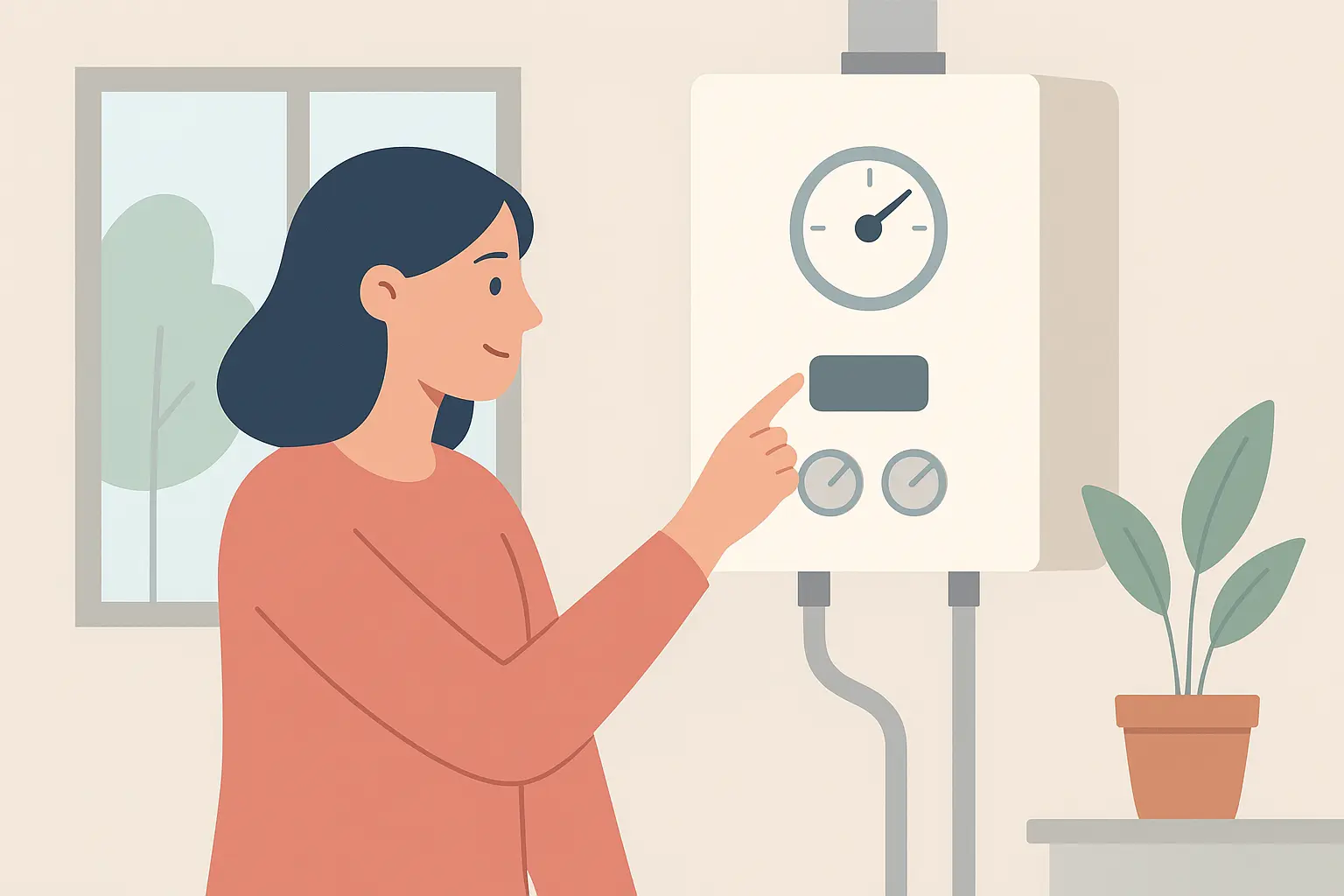
Why Boiler Pressure Matters
Most modern combi and system boilers in UK homes should sit between 1 and 1.5 bar when cold. When the heating is on, it will rise slightly, which is normal.
If it drops much below 1 bar, the boiler may lock itself out for safety. You might see an error code or just find that nothing happens when you turn the heating on. I’ve had customers in Highcliffe tell me they thought the boiler had died completely, when in reality it just needed repressurising.
Pressure is essentially the force of the water inside your sealed heating system. If it’s falling repeatedly, water is escaping somewhere or there’s a fault with one of the components that manages that pressure.
Common Reasons Your Boiler Pressure Keeps Dropping
Here are the usual culprits we come across in homes around Mudeford, Burton and the wider Christchurch area.
1. A Leak Somewhere in the System
This is the big one. Even a tiny leak from a radiator valve, pipe joint or under the floorboards can slowly reduce pressure over time. Often you will not see obvious dripping. Instead, you might notice:
- A small damp patch near a radiator
- Staining on ceilings below bathrooms
- Corrosion around a radiator valve
In older properties especially, we sometimes find pinhole leaks in pipework under suspended floors.
2. Recently Bled Radiators
If you’ve let air out of your radiators, you’ve also released some water and that reduces system pressure. It’s completely normal to need to top the pressure up afterwards.
I often get asked, “I bled one radiator and now the boiler won’t start, have I broken it?” No, it just needs repressurising.
3. A Faulty Pressure Relief Valve
The pressure relief valve is a safety device. If the system pressure gets too high, it releases water outside through a copper pipe, usually on an external wall. If that valve becomes faulty or gets debris stuck in it, it can weep water and slowly drop your pressure.
If you notice water dripping from an outside pipe even when the heating isn’t on, that’s worth getting checked.
4. Expansion Vessel Problems
Inside the boiler there’s an expansion vessel that absorbs the natural increase in pressure when water heats up. If it loses its air charge or fails, you’ll often see pressure rise quickly when the heating is on, then drop low once it cools.
This isn’t a DIY fix and needs an engineer, but it’s a very common issue on boilers that are a few years old.
Step-by-Step: How to Fix Low Boiler Pressure
If your boiler is otherwise working fine and there’s no obvious leak, you can usually top the pressure up yourself.
Step 1: Check the Pressure Gauge
Look at the gauge on the front of the boiler. If it’s below 1 bar and in the red, it needs topping up.
Step 2: Turn the Boiler Off and Let It Cool
Never repressurise while the system is very hot. Switch it off and wait 20 to 30 minutes.
Step 3: Locate the Filling Loop
This is usually a silver braided hose under the boiler with one or two small taps or levers. Some newer boilers have an internal filling key instead.
Step 4: Slowly Open the Valves
Open the valves gently and watch the pressure gauge as it rises. Do not leave it unattended.
Step 5: Stop at Around 1.2 to 1.5 Bar
Close both valves firmly once you reach the correct pressure. Do not overfill. If you accidentally go too high, you may need to bleed a radiator slightly to reduce it.
Step 6: Turn the Boiler Back On
Switch it back on and check everything is working as normal.
If you find yourself doing this more than once every few months, there is likely an underlying issue that needs attention.
When to Call a Professional Heating Engineer
There’s no harm in topping up pressure occasionally. But you should get professional help if:
- The pressure drops again within days
- You can see or suspect a leak
- Water is coming from the external overflow pipe
- The boiler keeps locking out with fault codes
In areas like Highcliffe, Mudeford and Burton, we often see pressure issues linked to ageing systems or older radiators that have slowly corroded internally.
Sometimes repeated pressure loss is actually the early sign that a boiler is nearing the end of its life. If you’re unsure whether repair or replacement makes more sense, it’s worth understanding your options around a new boiler installation.
Preventing Future Boiler Pressure Issues
While not every problem is avoidable, you can reduce the chances of repeated pressure loss.
- Have your boiler serviced annually
- Check radiator valves occasionally for small leaks
- Bleed radiators carefully and always recheck pressure afterwards
- Keep an eye on the gauge every few weeks during winter
An annual service often picks up small issues like a weakening expansion vessel before they turn into bigger faults. It’s far cheaper and less stressful than losing heating during a January cold snap.
If your boiler pressure keeps dropping and you’re not sure why, it’s better to get it checked properly rather than constantly topping it up and hoping for the best. Jet Professional Plumbing & Heating Ltd works with homeowners and tenants across the local area, offering straightforward advice and practical repairs without overcomplicating things.
If you’d like a second opinion or need someone to take a proper look, contact our team today for expert help and we’ll talk you through the next steps.