







If you’re looking at a replacement boiler installation, one of the first questions that usually crops up is this: “Do I need to change the radiators as well?”
It’s a fair question. A new boiler is a big investment and most homeowners understandably want to get it right first time. I’ve worked in plenty of homes across Verwood, Fordingbridge and Christchurch where the boiler was swapped but the radiators were left alone, and in other cases where changing both made perfect sense. It depends on your system, your home and what you want from it.
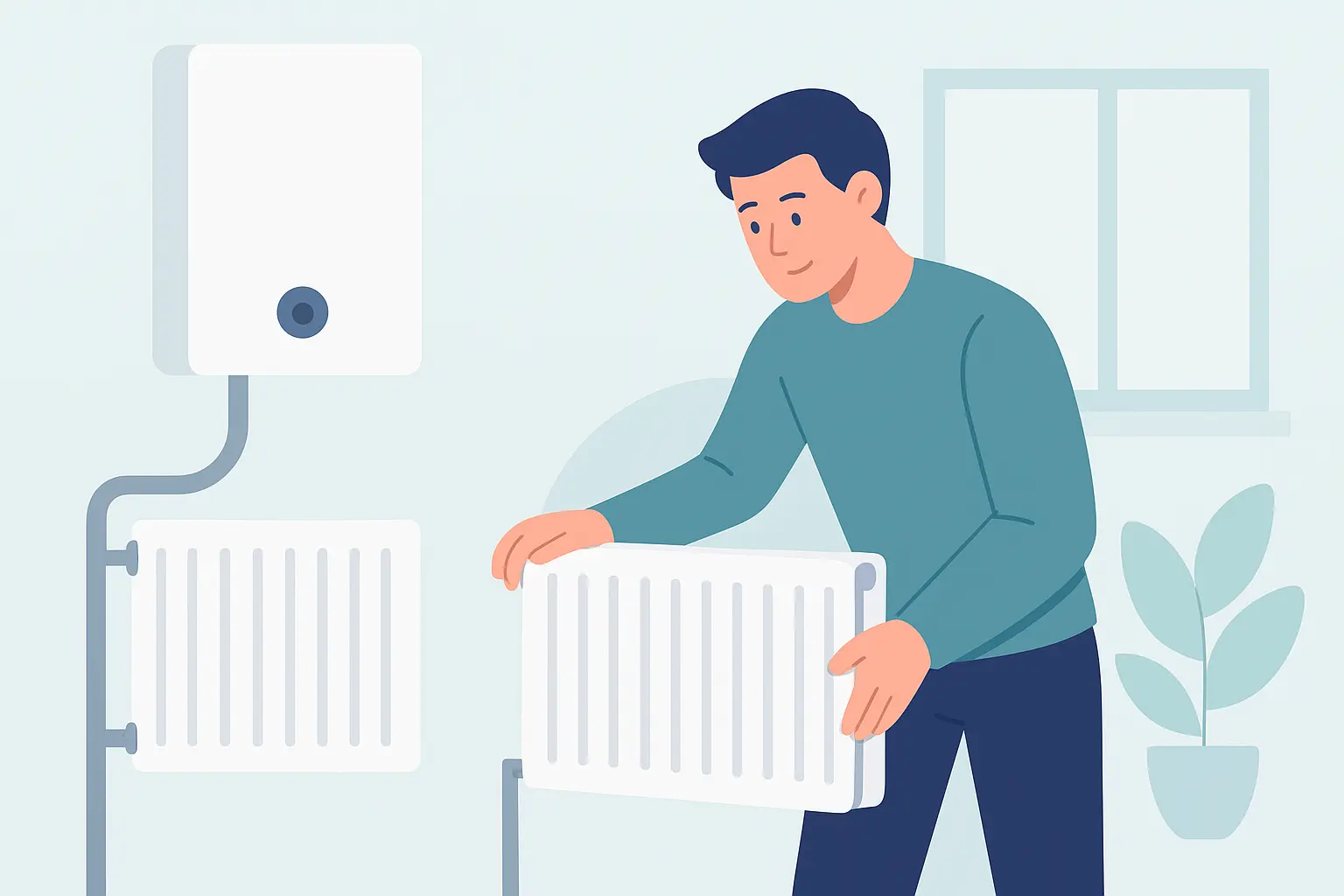
Do Old Radiators Work with New Boilers?
In many cases, yes, your existing radiators will work perfectly well with a new boiler.
Modern condensing boilers are more efficient than older models but they still push hot water around a standard wet central heating system. If your radiators are in good condition, not heavily corroded and properly sized for the rooms, there’s often no technical reason they must be replaced.
That said, there are a few things we always check before simply connecting a new boiler to an old system:
- Are the radiators heating evenly or are there cold spots?
- Is there significant rust or sludge in the system?
- Are the rooms warming up quickly enough?
- Are the radiators the right size for the space?
If the radiators are working well and the system can be properly flushed and protected, keeping them can be a sensible and cost effective choice.
When You Should Replace Your Radiators
There are situations where upgrading your radiators at the same time as your boiler is the smarter move.
1. Heavy Sludge or Internal Corrosion
Older systems can collect magnetite sludge inside the radiators. You’ll often see the signs if the bottoms stay cold or the water drained from the system runs black. In some cases a thorough flush will sort it. In worse cases, the internal corrosion is too far gone.
Fitting a brand new boiler onto a heavily contaminated system can shorten the life of the new appliance. That’s not something you want after spending good money.
2. Radiators Are Undersized
Many older properties, especially those that have been extended, still have radiators sized for how the house was decades ago. Conservatory added. Walls insulated. Layout changed. The heat demand shifts.
If a room never quite gets warm even though the radiator is piping hot, it may simply not be large enough. A new boiler won’t magically fix that.
3. You’re Lowering Flow Temperatures
Modern boilers run most efficiently at lower water temperatures. To get the same room warmth at a lower flow temperature, you may need slightly larger radiators. This is becoming more common as homeowners look to cut running costs.
4. They’re Just at the End of Their Life
If the radiators are 20 or 30 years old, thin, chipped and starting to weep from seams or valve joints, you might decide it’s time. It often makes sense to do it while the system is already drained down.
Benefits of Upgrading Radiators with Your Boiler
Changing both together isn’t always essential but it can bring some clear advantages.
- Improved heat output in colder rooms
- Faster warm up times
- Better efficiency if designed around lower temperatures
- A cleaner system from day one
- Aesthetic improvement if you’re redecorating
I often find that when customers in areas like Verwood or Fordingbridge are already renovating, it makes practical sense to upgrade radiators at the same time. Floors might be up. Walls being replastered. Access is easier. That can reduce disruption compared to doing it separately later on.
If you’re simply replacing a failed boiler in an otherwise healthy system, though, wholesale radiator replacement is rarely mandatory.
Cost Considerations and Long-Term Savings
Budget obviously plays a part.
Keeping existing radiators will reduce the upfront cost of your boiler upgrade. However, cutting corners on a system that is already struggling can cost more later in breakdowns or inefficiency.
From a running cost perspective, properly sized radiators working at lower flow temperatures can help a condensing boiler stay in its most efficient mode for longer. That’s where you’ll see genuine fuel savings over time.
It’s also worth thinking about future disruption. Draining a system down again in two years to replace multiple radiators means more labour, more mess and potentially redecorating twice.
This is why a proper system assessment matters. A quick swap without checking the wider heating setup is never ideal. Regular servicing and occasional checks, like those discussed on the service and repair sections of our website, also help keep both boilers and radiators working as they should.
Professional Advice and System Assessment
The right answer always comes down to the specific property.
When we assess homes in Christchurch and surrounding areas, we look at the whole system rather than just the boiler. Heat loss of each room. Existing pipework condition. Radiator output. Water quality.
Sometimes I’ll tell a homeowner their radiators are absolutely fine and a good chemical flush with a magnetic filter will do the job. Other times I’ll point out that two small radiators in a large open plan space are never going to perform efficiently with a modern boiler running at sensible temperatures.
A decent installer should explain the reasoning clearly. You should never feel pushed into replacing radiators without a technical explanation that makes sense.
Conclusion: Making the Right Choice for Your Heating System
You do not automatically need new radiators when you upgrade your boiler. Many systems work very well with existing radiators once properly cleaned and balanced.
However, if your radiators are heavily corroded, poorly sized or you want to run your new boiler at lower, more efficient temperatures, upgrading them at the same time can be a smart long term decision.
Every home is different. The best approach is a proper assessment and honest advice based on how your heating system actually performs day to day. If you’d like straightforward guidance tailored to your property, contact us today to get expert advice on your boiler upgrade. The team at Jet Professional Plumbing & Heating Ltd will be happy to help you make the right call for your home.