


Where a radiator is cold tells you a lot. Cold at the top usually means trapped air, which bleeding fixes. Cold at the bottom usually means sludge has settled inside. Cold all over, while others are fine, is often a stuck valve. Radiators furthest from the boiler staying lukewarm usually means the system needs balancing.
Some of these are simple homeowner fixes; others need an engineer. Our heating page explains the work we do on central heating systems.
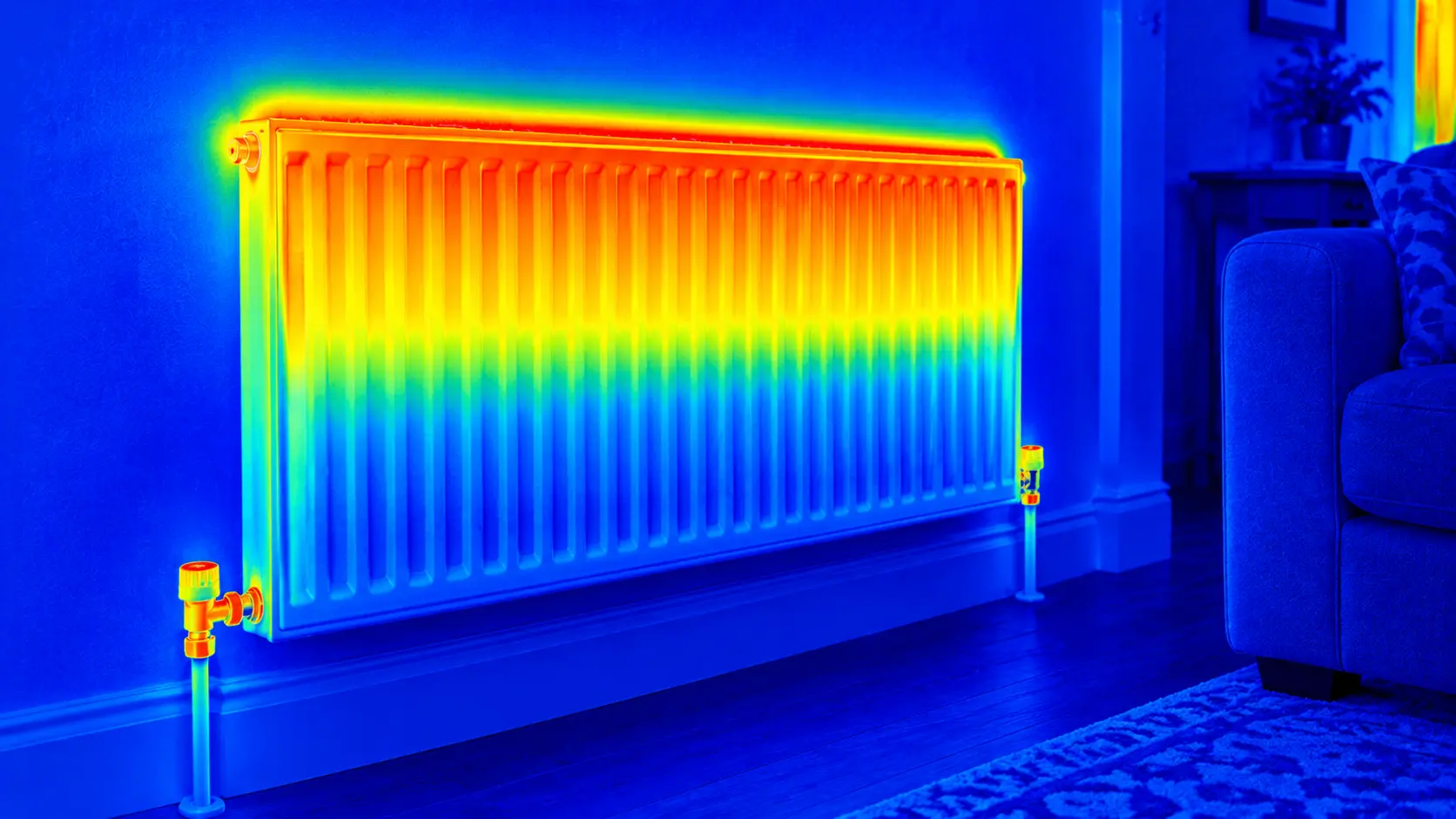
Quick guide to cold radiator symptoms
| Symptom | Likely cause | Who can fix it |
| Cold at the top | Trapped air | Homeowner (bleed the radiator) |
| Cold at the bottom | Sludge or debris | Engineer (clean or flush) |
| Cold all over, others fine | Stuck TRV pin or closed valve | Homeowner check, then engineer |
| Cold in the middle | Sludge or debris build-up | Engineer |
| Furthest radiators lukewarm | System unbalanced or weak pump | Engineer |
| All radiators cold | Boiler, pump or controls issue | Check settings, then engineer |
Cold at the top: bleed it
Turn the heating off and let it cool. Use a radiator key to open the bleed valve at the top corner a quarter turn until water appears, then close it. Check the boiler pressure afterwards and top it up if needed, following your boiler manual.
Cold at the bottom: likely sludge
Corrosion inside the system produces a black sludge called magnetite, which settles at the bottom of radiators. It reduces heat output and can damage the boiler over time. Signs include dark water when you bleed a radiator. A system clean or powerflush, followed by inhibitor and ideally a magnetic filter, usually sorts it.
Cold all over: check the valves
- Turn the thermostatic radiator valve (TRV) to its highest setting
- If it still doesn’t heat, the pin under the TRV head may be stuck
- Check the lockshield valve at the other end hasn’t been closed
If you’re not confident, leave it to an engineer.
Some radiators cold, others hot: balancing
In an unbalanced system, water takes the easiest route, so radiators nearest the boiler get hot and those further away stay lukewarm. Balancing adjusts the lockshield valves so each radiator gets its share. It’s fiddly work and best done by an engineer with the right tools.
All radiators cold
Check the thermostat, timer and boiler pressure first. If the boiler is showing a fault or won’t fire, book a boiler repair.
Cold radiators in New Forest homes
Around Ringwood, Lymington and Christchurch, extended homes often have radiators added over the years to an older system. That can leave the pipework undersized for the extra radiators, or the system unbalanced. If you’ve recently extended, our guide on extending your home and upgrading your boiler may help.
Frequently asked questions
Should the heating be on when I bleed radiators?
No. Turn it off and let the radiators cool first. The water can be very hot, and air settles at the top more easily when the pump is off.
Why does my radiator need bleeding every few weeks?
Air is getting into the system, often through a leak, a faulty automatic air vent or a pump problem. It’s worth having it investigated.
Will a powerflush fix cold radiators?
If the cause is sludge, often yes. If the problem is air, valves or balancing, a powerflush won’t help.
Get your heating working properly
If your radiators still aren’t heating evenly, give us a ring on 01425 542077 or send us a message. We’ll come and have a look.